
South Ontario's Growth Should Bring More Libraries
As South Ontario continues to add new neighborhoods, families, schools, businesses, and public amenities, City Council candidate D'Andre Lampkin says access to library services should grow with the community.
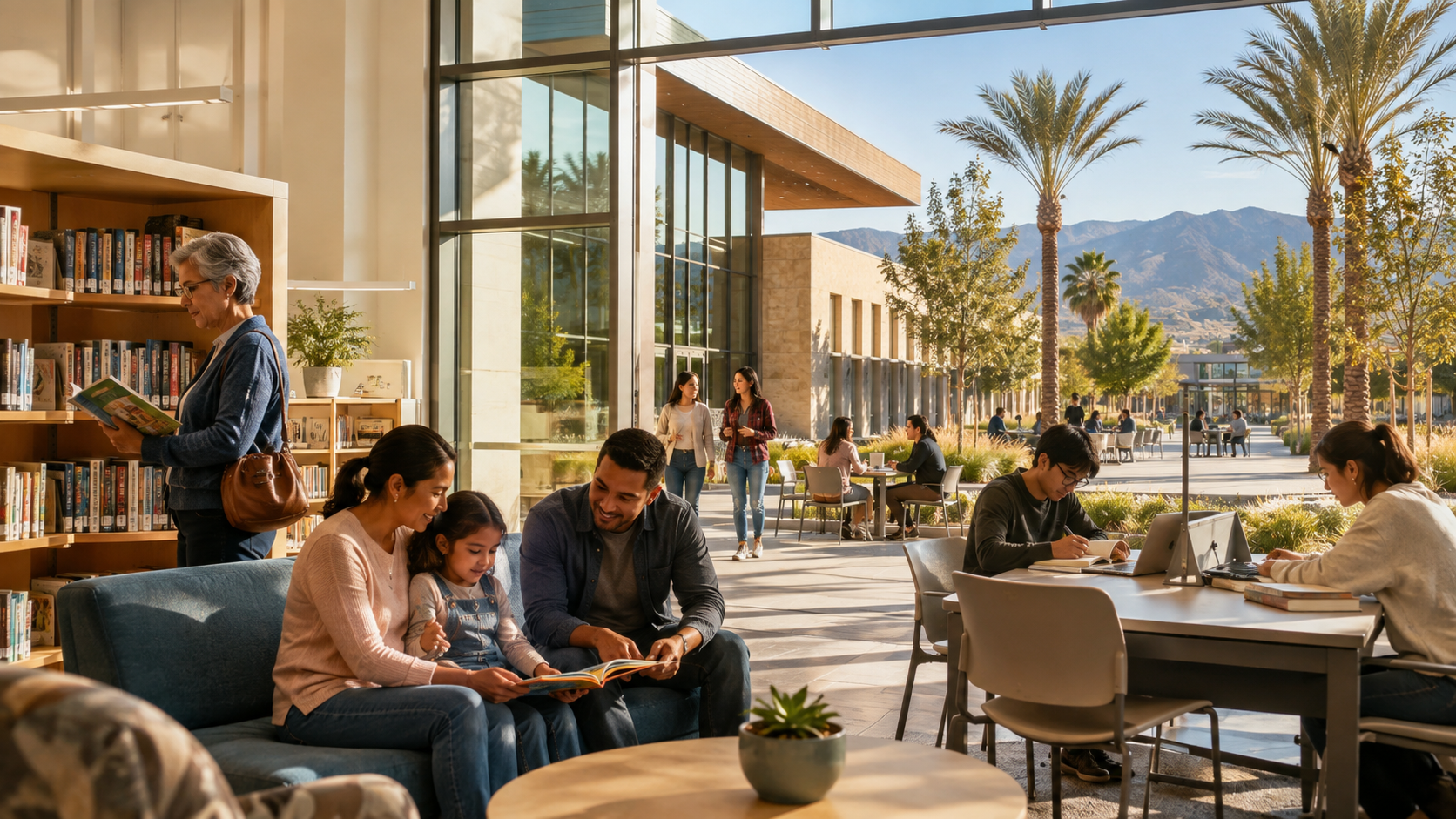
As South Ontario continues to add new neighborhoods, families, schools, businesses, and public amenities, City Council candidate D'Andre Lampkin says access to library services should grow with the community.
South Ontario is becoming one of the most dynamic areas of the city.
New neighborhoods are taking shape. Roads and sidewalks are being extended. Shopping, recreation, entertainment, and employment opportunities are moving closer to residents. Families are establishing roots in communities that only a short time ago were surrounded by dairies, agricultural land, and undeveloped fields.
During neighborhood listening walks, D'Andre D. Lampkin has heard considerable pride in Ontario's progress. Residents have praised the city's new streets, professional baseball stadium, airport, public-safety services, expanding retail options, and continued investment in Ontario Ranch.
They have also raised an important question:
As South Ontario grows, where are the public libraries and community learning spaces that should accompany that growth?
Residents should not have to choose between celebrating development and asking whether public services are keeping pace. A growing community needs both.
"Libraries are not amenities that should be considered only after development is complete," Lampkin said. "They are part of the civic infrastructure that helps a community become educated, connected, economically prepared, and resilient."
Libraries Are More Than Buildings Filled With Books
The modern public library serves a much broader purpose than many people realize.
Libraries provide children with early-literacy programs, homework support, safe places to study, and opportunities to discover subjects beyond the classroom. They help teenagers access technology, prepare for college, explore careers, and find productive spaces to gather.
Adults use libraries to search for employment, prepare résumés, complete applications, access government services, develop new skills, and receive assistance navigating an increasingly digital world.
Older adults rely on libraries for technology instruction, educational programming, social connection, research assistance, and access to reliable information.
For residents without dependable internet service, a public library may be the only practical place to complete an online application, attend a virtual appointment, print a document, or communicate with an agency.
"Libraries support people at nearly every stage of life," Lampkin said. "A young child learning to read, a student completing an assignment, a parent applying for work, an entrepreneur researching a business idea, and an older adult learning to use new technology may all depend on the same public institution."
Growth Should Include Civic and Educational Infrastructure
Development discussions often focus on housing production, road capacity, utilities, traffic, parks, public safety, and commercial services.
Those considerations are essential. But complete communities also require places devoted to learning, culture, public information, and civic connection.
As thousands of residents establish homes in South Ontario, the demand for library access will not remain concentrated elsewhere in the city. Distance, traffic, family schedules, mobility limitations, and transportation availability can determine whether a resident can realistically use an existing facility.
A library may technically be available somewhere in Ontario, but that does not necessarily mean it is conveniently accessible to a family living near the city's southern boundary.
"Access cannot be measured only by whether a service exists within city limits," Lampkin said. "It should also be measured by whether residents can reasonably reach it and use it as part of their daily lives."
South Ontario's growth therefore presents an opportunity to plan proactively rather than wait until residents experience a significant service gap.
Libraries Strengthen Educational Opportunity
A library in South Ontario could become an important partner to nearby schools, students, educators, and families.
Children do not stop learning when the school day ends. Yet not every student returns home to a quiet study space, a strong internet connection, a computer, a printer, or an adult who can help research an assignment.
Libraries help reduce those differences by providing shared access to educational resources.
They can offer:
- Early-childhood literacy and story programs
- Homework assistance and tutoring
- Study rooms and collaborative learning spaces
- Computers, printers, and internet access
- College and financial-aid workshops
- Career and technical-education resources
- Summer reading and enrichment programs
- Arts, music, science, and cultural activities
Lampkin said library planning should include direct consultation with students, parents, teachers, school districts, and youth-serving organizations.
"The goal should not be to build a room with shelves and call the work finished," Lampkin said. "The goal should be to create a learning center designed around how South Ontario residents will actually use it."
A Library Can Support Workforce and Economic Development
Ontario's growth is creating employment opportunities across logistics, aviation, healthcare, hospitality, construction, public service, entertainment, retail, and professional industries.
Residents should have clear pathways to participate in that growth.
A modern library can support workforce development by providing job-search assistance, digital-skills instruction, résumé workshops, interview preparation, language-learning resources, certification study materials, and connections to training programs.
It can also help entrepreneurs and small-business owners research markets, develop business plans, access databases, learn about licensing requirements, and find information about contracting opportunities.
"Economic development should not merely attract employers," Lampkin said. "It should help Ontario residents build the skills and access the information necessary to benefit from the opportunities being created around them."
A South Ontario library could serve as a bridge between residents and local schools, colleges, workforce-development programs, apprenticeship opportunities, employers, and business organizations.
Libraries Help Close the Digital Divide
During Lampkin's listening walk through the Esperanza community, residents reported little to no reliable Wi-Fi service in portions of their neighborhood.
That concern demonstrated why digital connectivity must be treated as essential infrastructure.
Internet access now affects telehealth, employment, education, emergency information, government services, financial management, and communication with relatives and caregivers.
A public library cannot replace the responsibility of internet providers to deliver reliable service. It can, however, provide an important access point while broader connectivity problems are addressed.
A South Ontario library should include:
- High-speed public internet
- Reliable Wi-Fi inside and around the facility
- Public computers and device-charging stations
- Technology assistance for older adults
- Online safety and fraud-prevention education
- Access to virtual government and healthcare services
- Laptops or mobile hotspots available through lending programs, where feasible
"Digital access is now closely connected to independence and opportunity," Lampkin said. "Residents should not be excluded from essential services because of where they live or whether their home connection is reliable."
Libraries Also Build Community
South Ontario residents have repeatedly expressed interest in more places where neighbors can gather, learn, and participate in community life.
A library can help meet that need without functioning as a commercial space where people are expected to spend money.
It can provide meeting rooms for neighborhood groups, workshops for families, educational presentations, cultural programs, local-history exhibits, public-safety education, and emergency-preparedness training.
For newer neighborhoods, these shared spaces can be especially valuable. Residents may come from different cities, regions, or countries and may not yet have established relationships with one another.
Libraries create opportunities for those connections to form naturally.
"A neighborhood becomes a community when people have places to meet, learn from one another, and develop a shared sense of belonging," Lampkin said. "Libraries help create that civic fabric."
Libraries Are Part of Community Resilience
Lampkin's emergency-management experience also informs his view of libraries as resilience infrastructure.
During extreme heat, power disruptions, communications failures, or other emergencies, trusted public facilities can help distribute information and connect residents with services. Depending on their design, staffing, and emergency plans, libraries may support public communication, device charging, internet access, preparedness education, and referrals to assistance.
They should not be presented as substitutes for designated shelters, cooling centers, emergency operations, or public-safety facilities. However, they can become part of a larger network of trusted community locations.
Preparedness programming at a South Ontario library could include:
- Earthquake readiness
- Extreme-heat safety
- Family communication plans
- Emergency supply preparation
- Neighbor check-in programs
- Fraud and disaster-scam awareness
- Information for older adults and medically vulnerable residents
"A resilient community needs trusted places where residents know they can obtain accurate information," Lampkin said. "Libraries already possess the credibility, accessibility, and educational mission needed to support that work."
What a South Ontario Library Could Look Like
Lampkin said the City should begin with a public needs assessment rather than assume that a traditional library model is the only answer.
Residents should be asked:
- Where should a facility be located?
- What hours would be most useful?
- Which age groups and neighborhoods are currently underserved?
- What educational and workforce programs are most needed?
- How should the facility connect with parks, schools, transit, and commercial areas?
- Should it include community meeting rooms, study areas, technology labs, or flexible event space?
- What services could begin before a permanent building is completed?
The result could be a full-service branch, a library and community-learning center, or a phased facility that expands as South Ontario's population and needs grow.
In the meantime, the City could explore interim options such as mobile library services, pop-up programs, partnerships with schools and community centers, expanded digital access, and scheduled library programming within South Ontario neighborhoods.
"The conversation should not be reduced to whether the City can build a major facility tomorrow," Lampkin said. "The question is whether we are planning today for the library access South Ontario will need in the years ahead."
Responsible Planning Requires Financial Discipline
Supporting additional library services also requires a responsible discussion about land, construction, staffing, operations, technology, maintenance, and long-term funding.
A new facility should not be promised without understanding the full cost of operating it successfully.
Lampkin said the City should evaluate available public land, development agreements, grants, partnerships, capital-improvement planning, and opportunities to incorporate library space into future civic projects.
"Building a library without the resources to staff, maintain, and program it would not serve residents well," Lampkin said. "Prepared leadership means considering both the vision and the long-term responsibility that comes with it."
He said transparency would be essential throughout the process so residents understand possible locations, estimated costs, funding options, timelines, and tradeoffs.
A Complete South Ontario
Residents have expressed pride in how quickly South Ontario is becoming a place where people can live, work, shop, and enjoy recreation close to home.
The next stage of growth should ensure they can also learn, connect, create, prepare, and participate in civic life close to home.
A library would not solve every challenge associated with growth. It would, however, represent an investment in the people living within that growth.
"Roads help people move through a city. Libraries help people move forward in life," Lampkin said.
South Ontario deserves development that is measured not only by the number of homes and businesses built, but also by the opportunities created for children, families, workers, older adults, and future generations.
As Ontario plans its next chapter, library access should be part of that vision.
Residents can share their ideas for library services and other South Ontario priorities at LampkinForOntario.org.
Written by
Lampkin for Ontario Campaign
Content creator and writer sharing insights and stories.