Lampkin Joins Ontario Neighborhood Talks to Hear Residents' Concerns
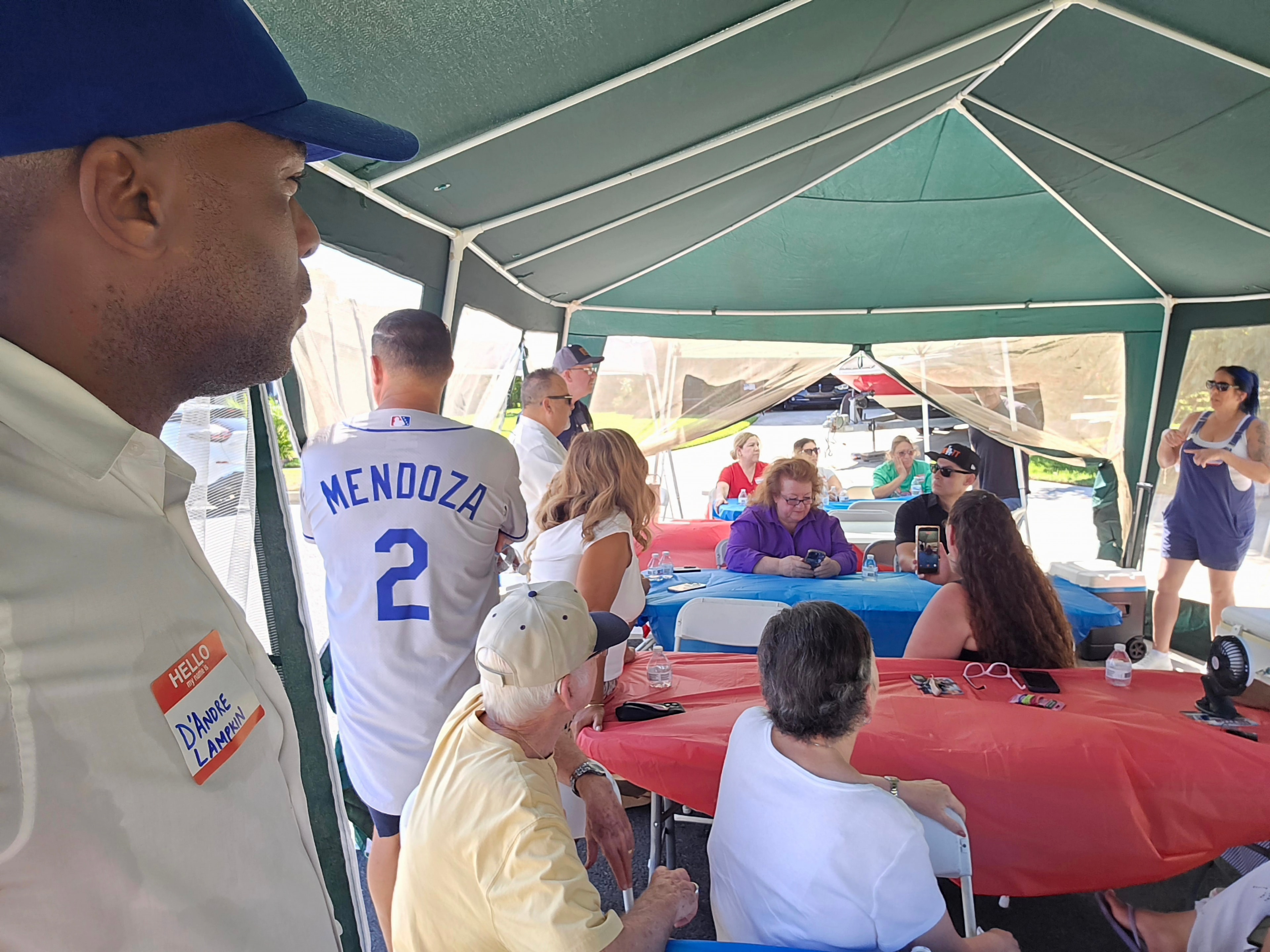
D'Andre Lampkin attended the 2nd Annual Ontario Neighborhood Talks, listening to residents discuss homelessness, nuisance properties, safety, and the need for accountable government.
Lampkin Joins Ontario Neighborhood Talks to Hear Residents' Concerns and Clarify City Processes
Ontario City Council candidate D'Andre Lampkin joined residents at the 2nd Annual Ontario Neighborhood Talks to discuss homelessness, nuisance properties, neighborhood safety, local services, development rumors, and the need for responsive and accountable government.
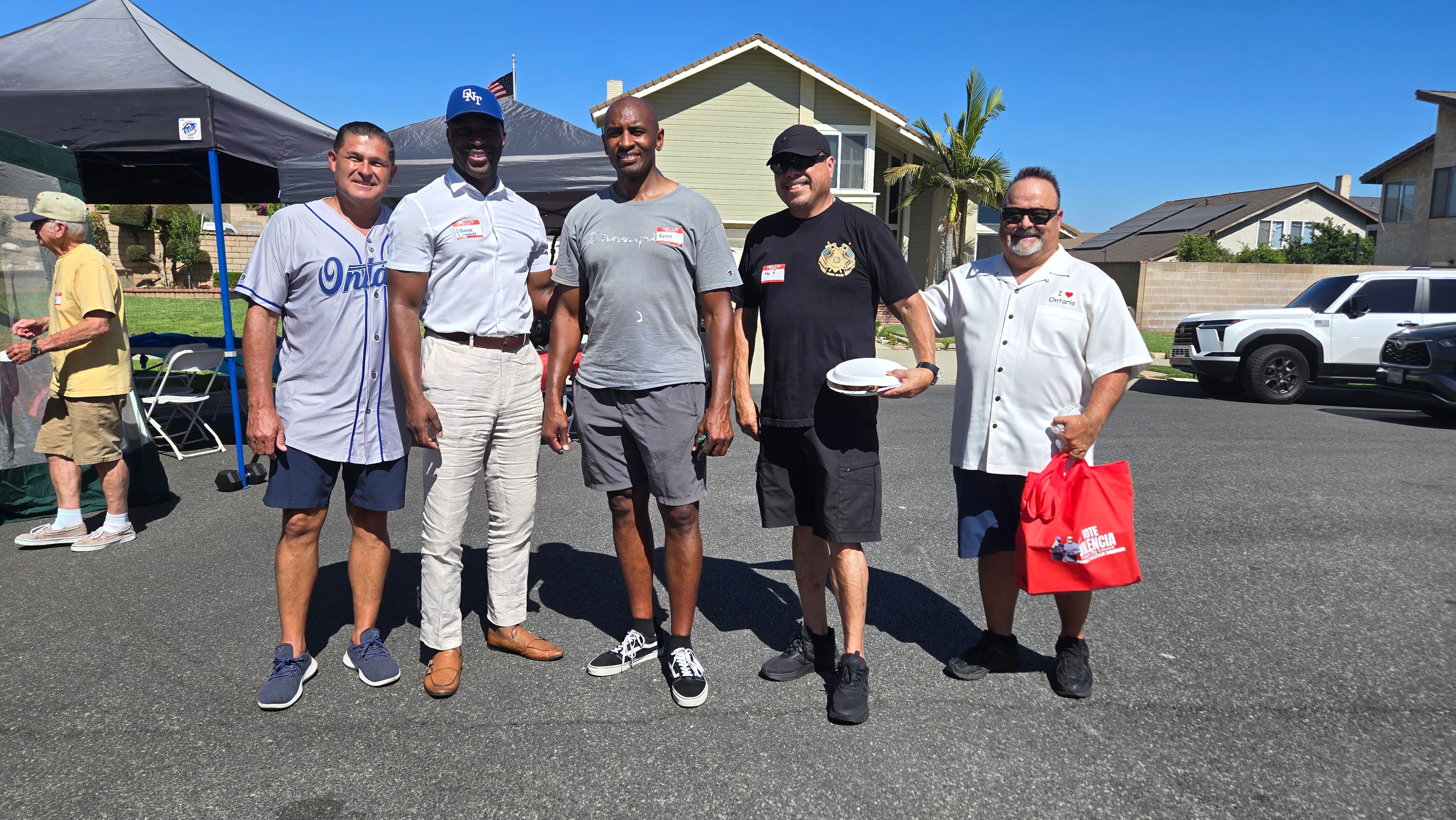
D'Andre D. Lampkin, candidate for Ontario City Council, District 3, recently attended the 2nd Annual Ontario Neighborhood Talks, a resident-led community gathering hosted by Kevin Kizzee in the Parco cul-de-sac near the 60 Freeway.
Although the event was held just north of District 3 in District 2, its proximity to the district boundary made the discussion relevant to residents throughout the surrounding area. Participants gathered over a barbecue lunch for an open conversation about neighborhood safety, homelessness, housing, schools, local services, commercial properties, and the challenges residents encounter when seeking assistance from government.
Lampkin said he attended primarily to listen. Although he is not currently an elected City official, his more than 20 years of law-enforcement and public-safety experience, together with his service on the Ontario Planning Commission, helped him explain how certain municipal processes work and distinguish verified development information from neighborhood rumors.
"I appreciated Kevin's invitation and the willingness of residents to speak candidly about what they are experiencing," Lampkin said. "My role was to listen, share what I have learned through public service, and help residents better understand how certain processes work. I was not speaking on behalf of the City or directing City staff."
Residents Seek Greater Accountability for Homelessness Services
Residents asked how public funds designated to address homelessness are being used and whether existing programs are producing visible results in surrounding neighborhoods.
Questions were raised about the City of Ontario's wellness center, the process for helping individuals enter temporary housing, and why emergency beds were perceived to be underused. Some participants expressed concern that people needing assistance were not always being moved into available shelter or temporary housing quickly enough.
Lampkin said homelessness is a complex issue involving outreach, available services, eligibility, personal consent, mental and behavioral health, housing capacity, and coordination among multiple agencies.
"Residents deserve clear information about what services exist, how those services are accessed, how public resources are being used, and what outcomes are being achieved," Lampkin said. "The existence of a program is not enough. People want to understand whether it is improving conditions for both those in need and the neighborhoods affected."
Nuisance Property Raises Health and Safety Concerns
Residents discussed a nearby residential property they said had become associated with trespassing, trash, odors, suspected illegal activity, and access to encampments near the 60 Freeway.
Participants said the residence had previously been boarded by the City of Ontario's Community Improvement Department after being identified as a nuisance property. They also reported that an explosion had occurred at the home.
Some residents believed the property had been used for illegal drug activity and associated it with prostitution, theft, and increased foot traffic from people seeking drugs. Those allegations, along with the cause of the explosion, were not independently verified during the community discussion.
Residents said conditions became severe enough after the explosion that some neighbors temporarily left their homes, stayed in nearby hotels, and wore masks because of the odor. They expressed continued concern about trash along the side and rear of the structure, unpleasant smells, and what they viewed as insufficient progress toward a complete cleanup.
Lampkin said the reported conditions warrant appropriate follow-up while emphasizing that public discussion must distinguish between confirmed information and neighborhood suspicions.
"Residents should not have to live indefinitely beside a property that presents documented health, safety, sanitation, or nuisance concerns," Lampkin said. "At the same time, government must proceed based on verified evidence, lawful authority, and established procedures."
Why Nuisance-Abatement Cases Can Take Time
Several residents expressed frustration with what they considered a lengthy process for resolving nuisance properties.
Lampkin used the discussion to explain where residents should report code-enforcement, sanitation, safety, or property-maintenance concerns and why some cases require more than a complaint and an immediate cleanup order.
Drawing on his law-enforcement background and Planning Commission experience, Lampkin explained that nuisance-abatement efforts may involve:
- Inspection and documentation
- Formal notice to a property owner
- Time for the owner to correct identified violations
- Administrative hearings
- Coordination among multiple departments
- Search, inspection, or entry authority
- Court orders or other legal action
- Compliance with property rights and due-process requirements
Lampkin emphasized that he was explaining the general process rather than making a legal determination about the particular property discussed at the gathering.
"Residents are understandably frustrated when a serious condition persists near their homes," Lampkin said. "However, cities must act lawfully, ethically, and with respect for due process. Property owners have rights, and government may need to establish a documented record before taking certain actions."
He added that due process should not become an excuse for poor communication or unnecessary delay.
"Residents may not always receive an immediate resolution, but they should understand which department is responsible, what steps have been taken, what remains to be done, and what follow-up they can reasonably expect," Lampkin said.
Similar Challenges Affect Commercial Properties
Residents also discussed commercial properties they would like to see repaired, improved, or redeveloped.
Lampkin explained that concerns involving commercial properties may include ownership rights, existing leases, zoning, financing, code violations, redevelopment agreements, and other legal or administrative limitations.
"People may see a commercial property that appears neglected and reasonably ask why the City cannot simply require an immediate transformation," Lampkin said. "The answer may involve legal rights, contractual relationships, land-use rules, and the difference between an unattractive property and a verified code violation."
He said residents deserve clear explanations about what the City can legally require, what steps are underway, and what decisions remain with private property owners.
Development Rumors at Grove Plaza Addressed
The conversation also included rumors that developers intended to construct apartments at Grove Plaza.
Lampkin addressed the claim and explained the difference between a rumor, an informal concept, a submitted development application, and a project formally approved through the City's public review process.
His service on the Ontario Planning Commission gave him familiarity with how proposed developments move through application, staff review, environmental analysis, public notice, hearings, and final decision-making.
Lampkin also discussed where the inaccurate information appeared to have originated and cautioned against presenting speculation as an approved development plan.
"Residents deserve accurate information about development proposals that may affect their neighborhoods," Lampkin said. "A rumor repeated online can quickly begin to sound like an approved project, even when no such decision has been made."
He added that correcting misinformation does not mean discouraging questions or opposition.
"Community participation is strongest when residents are responding to facts," Lampkin said. "People should ask questions and scrutinize development proposals, but they should also know what has actually been submitted, what remains under review, and what has or has not been approved."
Residents Discuss Experience and Qualifications in Public Office
Participants also expressed concern that some people enter politics without a substantial career, record of responsibility, or demonstrated investment in the communities they seek to represent.
Residents said they believed some candidates benefit primarily from name recognition, family connections, or established political relationships.
Lampkin said the comments reflected a desire for elected officials whose qualifications can be evaluated through their work, judgment, and record of service.
"Residents want leaders who have demonstrated accountability, consistency, preparation, and the ability to carry significant responsibility," Lampkin said. "A familiar name should never replace the need for experience, character, and meaningful community involvement."
Lampkin has more than 20 years of law-enforcement and public-safety experience and currently serves on the Ontario Planning Commission. His background also includes emergency management, business ownership, nonprofit leadership, neighborhood service, and community-resilience work.
Water Concern Reported Near Grove Avenue
Residents reported what appeared to be continuous water flowing from concrete on the property of a 7-Eleven near Grove Avenue and the 60 Freeway.
Participants described the condition as occurring throughout the day and questioned whether it represented water waste.
Lampkin noted that the source would need to be investigated before reaching a conclusion. Possible causes could include irrigation, plumbing, drainage, groundwater, or another infrastructure issue.
He encouraged residents to document the exact location, dates, times, photographs, and whether the water was reaching the sidewalk, gutter, or roadway before submitting the concern through the appropriate City reporting process.
"Specific details help City personnel identify the responsible party and determine whether the condition involves water waste, maintenance, drainage, or another issue," Lampkin said.
Neighborhood Issues Cross District Boundaries
Lampkin said attending the District 2 gathering was appropriate because homelessness, freeway-adjacent encampments, nuisance properties, commercial development, traffic, and public-safety concerns do not stop at district lines.
Residents living near a boundary may shop, work, attend school, travel, and experience neighborhood conditions across multiple council districts.
"The location of a district line should not prevent neighboring communities from sharing information or working together," Lampkin said. "A condition just north of District 3 can still affect District 3 residents, businesses, traffic patterns, and public services."
Listening, Education, and Follow-Through
The event reinforced a concern Lampkin has heard during neighborhood walks throughout Ontario: residents become frustrated when they cannot determine who is responsible for an issue, what steps have been taken, or how long the process may require.
Lampkin said public leadership should involve more than acknowledging a complaint. It should also help residents understand:
- Which department or agency has jurisdiction
- What information should be included in a report
- What legal or administrative steps may be required
- Whether a concern has been verified
- What follow-up residents should reasonably expect
- How to distinguish an active proposal from an unverified rumor
"Leadership begins with listening, but it also requires helping people navigate government and understand how decisions are made," Lampkin said. "Residents may not always receive the outcome they want immediately, but they should receive honest information, respectful communication, and a clear explanation of the process."
Appreciation for Residents and Event Organizers
Lampkin thanked Kizzee for organizing the event and residents for sharing their experiences.
"I am grateful to Kevin Kizzee for creating a space where neighbors could speak openly and learn from one another," Lampkin said. "I also appreciate every resident who raised a concern, asked a difficult question, or offered insight into what is happening in the neighborhood."
He said the discussion reinforced several of his campaign priorities:
- Safe, prepared, and resilient neighborhoods
- Responsible stewardship and accountable government
- Thoughtful growth and infrastructure
- Communication and community trust
- Accessible and responsive public leadership
Residents can share questions, neighborhood concerns, or ideas for Ontario's future at LampkinForOntario.org.
Service • Experience • Community
Explore Topics
Written by
Lampkin for Ontario Campaign
Content creator and writer sharing insights and stories.